
Reviewed · VICTORIA FALLS VILLAGE TOURS
From Victoria Falls: Zimbabwe Traditional Village Tour
The most memorable part of this Zimbabwe traditional village tour is its close look at ordinary family life. You visit a rural homestead, see sleeping huts and cooking areas, hear about local customs, and may try a few daily tasks instead of simply looking at scenery from a vehicle.
I like the small-scale setting and the chance to meet the family who lives there. I also like that the households may rotate, helping the benefit reach different local families. The main consideration is that the outing can feel less polished than a standard sightseeing tour, and one pickup was reported late because of a communication problem.
Key points to know before you go
- A real family homestead: The visit centers on one household and its buildings, crops, and daily routines.
- About 2.5 hours: It fits neatly beside a Victoria Falls visit, safari activity, or town outing.
- English-speaking presentation: A village elder or resident may explain customs, beliefs, farming, and family life directly.
- Small groups are possible: Some departures have been private or shared by only two people.
- Bring a useful gift: Clothes, sweets, stationery, or other practical items may be donated to the family.
- Victoria Falls transfers only: Pickup is included within Victoria Falls, but not from areas outside town.
Leaving Victoria Falls for a rural homestead
Victoria Falls is famous for one enormous natural spectacle. This tour gives you a different reason to leave the resort area and see how families in Matabeleland North live beyond the main tourist zone.
Your transport is an air-conditioned vehicle, with transfers included in Victoria Falls. The drive itself is not the main attraction, but it changes the pace of your day. Hotels, curio shops, and activity desks give way to a more rural setting, where farming and household work shape the day.
The tour lasts around 2.5 hours, though the time spent at the settlement may be closer to 1.5 hours on some departures. That makes this an easy addition to a Victoria Falls schedule. You do not need to sacrifice a full day at the falls or an animal activity.
Pickup details deserve a little care. One person had a late collection and was not warned in advance, although the problem was sorted out quickly. I would confirm your pickup time and keep your phone available on the morning of the tour. The provider does not offer transfers for people staying outside Victoria Falls.
More victoria falls village tours in Victoria Falls:
- Horse Riding Community Village Tour Experience
★ 5.0 · 13 reviews - Victoria Falls Cultural Private Village Tour
★ 4.0 · 9 reviews - Victoria Falls: Chinotimba Township Tour with a Local Guide
★ 4.7 · 9 reviews
Meeting a family instead of entering a staged attraction
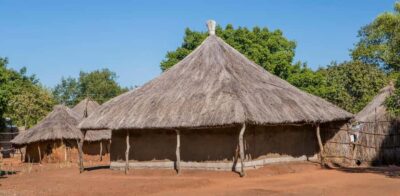
The visit usually centers on one family property rather than a large museum or a recreated cultural park. You may be shown several huts, including sleeping quarters and separate kitchen buildings, along with the surrounding farm area.
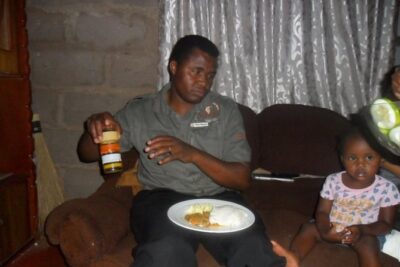
That distinction matters. A family home has practical details that are difficult to reproduce in a display village. You can see how rooms are used, how cooking is arranged, and how the household connects its living space to the land. One small group was taken around a tidy home and farm by the head of the family, who explained how the household functions.
The setting is not presented as a luxury attraction. In some cases, the household may not have known the exact arrival time, yet the family still welcomed the visitors. That can create a more personal meeting, but it also means the pace and presentation may vary. You should arrive with patience and respect, not with the expectation of a tightly timed stage show.
The tour company is said to rotate among different households. That is a useful feature because the visit does not appear to rely on one family alone. It also means you should not expect to meet the same host or see exactly the same property every time.
Seeing huts, kitchens, crops, and daily work
The most useful part of the visit is the practical tour of the homestead. You can expect to see where people sleep, where meals are prepared, and how the family uses its buildings.
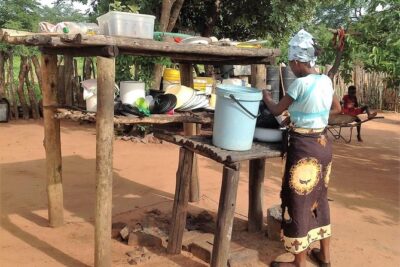
Cooking often takes place in separate kitchen huts. The arrangement gives you a better sense of household routines than a short talk about tradition would. Your host may explain why different buildings serve different purposes and how work is shared within the family.
You can also see crops being tended. Farming depends heavily on the annual rains, so the visit offers a plain look at the pressures facing rural families. One household had suffered from a poor rainy season, which made the connection between farming, income, and food especially clear.
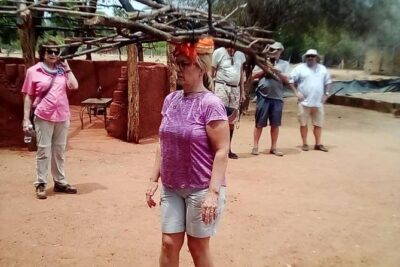
You may get the chance to help with a task. The activity description points to daily errands and village work, while individual visits have included trying a couple of activities. The exact task can depend on the household and the time of year, so think of this as an opportunity rather than a guaranteed demonstration.
That uncertainty is part of the character of the outing. Your visit is linked to real household routines, not a fixed show with the same sequence every afternoon.
Customs explained by local hosts
An English-speaking guide accompanies the tour, but the most direct explanations may come from a village elder or family member. One host, Bonani, was described as especially welcoming, and another village elder gave a clear presentation about customs, beliefs, and daily life.
You can ask questions as you go. This is where a small group makes a difference. With only one or two people, you have more room to ask about the buildings, farming, family roles, local ethnic groups, and reasons behind particular customs.
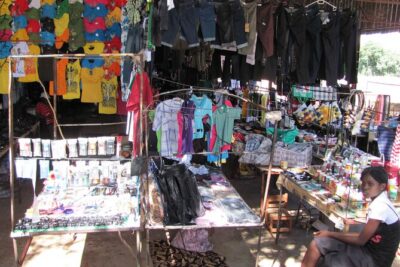
The tour is also useful for connecting rural life with what you see in Victoria Falls. Some people who sell goods in town live in nearby villages. Seeing a family home and farm can help you understand the lives behind the street stalls and craft markets.
I would keep your questions polite and specific. Ask about what you are shown, listen carefully, and avoid treating the family home as a collection of curiosities. A warm greeting, a little patience, and genuine interest will make the meeting better for everyone.
Same falls, a completely different kind of day:
- Helicopter Scenic Flight over Victoria Falls 12-13 minutes Flight
★ 5.0 · 1,391 reviews - Victoria Falls: Dinner Cruise on the Zambezi River
★ 4.9 · 925 reviews - Dinner Cruise on the Zambezi River
★ 5.0 · 518 reviews - Victoria Falls: Chobe National Park Day Trip with Lunch
★ 4.7 · 518 reviews
A small group can change the whole visit
Group size is not fixed in the information provided, but some departures have been private or limited to two people. That is a major advantage for this kind of tour.
In a tiny group, you can spend more time talking with your host and ask for clarification without holding up a busload of people. A solo visitor was welcomed into the settlement with a guide and received a personal explanation of the way of life there.
The tradeoff is that the transport and guide arrangement may feel informal. One small group was driven to the village by a taxi, then met by a local woman who showed them around. The driver was not presented as the professional guide. If you want a polished, guide-led cultural performance, this may feel loose.
If you want a personal meeting with a local family, that same informality can be a strength. The tour gives you access to a household and a conversation, not just a speech delivered from a platform.
What the 50 dollar price includes
The cost is $50 per person. That includes transfers in Victoria Falls, the traditional village tour, an English-speaking professional guide, and an air-conditioned vehicle.
For a 2.5-hour outing, $50 is not the cheapest way to spend an afternoon. The value depends on what you want from your Victoria Falls trip. If you only want the falls, river activities, and wildlife, this may feel optional. If you want context about local people and rural life, the cost pays for transport, a guide, and a direct household visit.
The small-group possibility improves the value. A private or nearly private visit gives you time to talk and ask questions, something that is harder to provide on a large group excursion.
You should also budget for a donation if you want to bring one. Useful options include old or new clothes, sweets, stationery, or other practical items. These are not required as part of the ticket, but a thoughtful gift can be a suitable way to thank the household. A tip may also be appropriate if you feel the host has given you a generous welcome, though the price does not state a required amount.
Do not bring something simply because it looks exotic. Practical items are better. Ask your hotel or guide what would be useful before you buy anything, and avoid making the handover feel like a performance.
The human side of Victoria Falls
The falls draw attention for good reason, but a trip built only around major sights can leave you with little sense of local life. This visit adds that missing layer.
You may learn how villagers manage homes, farms, cooking, and errands. You may also see the effect of a failed rainy season on a family that depends on agriculture. Those details put the wider area into human terms.
The tour does not claim that rural life is free from hardship. Its description presents a way of life with fewer modern pressures, but that should not be mistaken for an easier life. Farming depends on weather, income can be uncertain, and daily work takes time and effort.
That balance is important. You are not visiting a fantasy version of village life. You are seeing a household that has its own routines, customs, and challenges. The best approach is to listen rather than compare every detail with your life at home.
What may feel uneven
The main weakness is consistency. Because the tour can involve different households and local hosts, the quality of the explanation may vary from one departure to the next.
Several hosts have provided excellent English explanations, including detailed answers about customs and beliefs. Yet one person found the transport arrangements unclear, and another described being dropped at Monde Village before meeting a resident who led the household visit. This suggests the experience may be more community-based than conventionally organized.
That is not automatically bad. The local contact is the reason the tour can feel personal. Still, you should know that the professional guide, driver, and village host may be different people.
Allow some flexibility around pickup and the exact order of activities. Confirm the meeting arrangements in advance, especially if you have another booking soon after the tour. The cancellation policy allows a full refund when you cancel at least 24 hours ahead, and you can reserve without paying immediately, which gives you some planning flexibility.
Who will enjoy this visit most
I would choose this tour if you want to:
- Meet local people in a family setting
- Learn how rural homes, kitchens, and farms are used
- Ask questions about Zimbabwean customs and beliefs
- Add a cultural activity to a Victoria Falls itinerary
- Support a community-based visit with a donation or tip
- Travel in a very small group or possibly on your own
It suits curious adults, families with older children, and anyone who feels that a major attraction should be paired with local context. The short duration also works well for people with limited time.
I would think twice if you need a tightly scripted excursion, guaranteed activities, or a polished cultural show. You may also prefer another activity if your schedule cannot tolerate a delayed pickup or a visit that runs at a slightly different pace.
Practical manners for the household visit
Wear comfortable clothing suitable for walking around a rural home and farm area. The provided information does not specify a dress code, but modest, respectful clothing is a sensible choice when entering family living spaces.
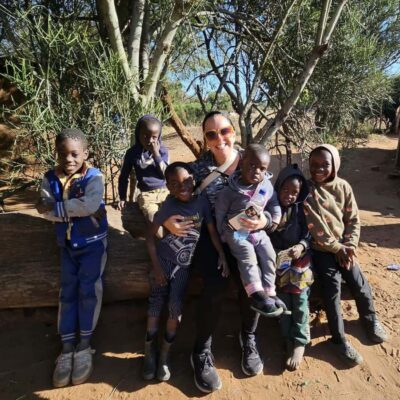
Ask before taking close-up photographs of people or private areas. One family posed for a group picture, but that does not mean every household will want the same thing. Let your host decide.
Bring water and protect yourself from the sun, although the tour information does not list specific refreshments or equipment. Keep your belongings compact so you can move easily between huts and farm areas.
Most of all, do not treat the visit as poverty sightseeing. Pay attention to skills, routines, hospitality, and knowledge as well as material conditions. The people you meet are hosts with their own dignity and choices, not scenery.
Should you book the Zimbabwe traditional village tour?
Book it if you want a short, personal look at life beyond the Victoria Falls tourist center. The strongest features are the family homestead setting, the chance to speak with a local elder or resident, and the possibility of trying daily tasks. The tour can also help you understand the connection between rural households, farming, and people working in Victoria Falls.
Go in knowing that the organization may be informal. Confirm your pickup, allow extra breathing room, and bring a useful donation if you wish. At $50, it is best value for someone who wants human contact and cultural context, not simply another scheduled attraction.
FAQ
Where does the traditional village tour take place?
The tour takes place in a rural part of Matabeleland North, Zimbabwe, near Victoria Falls. The visit centers on a traditional village or family homestead.
How long does the tour last?
The tour is scheduled for about 2.5 hours. Time spent at the village may be around 1.5 hours on some visits.
What is included in the $50 price?
The price includes transfers in Victoria Falls, the traditional village tour, a professional English-speaking guide, and an air-conditioned vehicle.
Are transfers available from outside Victoria Falls?
No. Transfers are provided in Victoria Falls only. Transfers from locations outside Victoria Falls are not available.
What will I see at the village?
You can expect to see family homes, sleeping huts, kitchen huts, crops, and parts of the household’s daily routine. A local host may explain customs, beliefs, farming, and how the family lives.
Will I be able to take part in village tasks?
You may have the opportunity to help with daily errands or try some activities. The exact tasks are not guaranteed and can depend on the household and visit.
What language is used on the tour?
The tour is offered in English. A professional guide, village elder, or family resident may explain the visit.
Can I bring a donation for the family?
Yes. Useful donations can include old or new clothes, sweets, stationery, or other items that may help the local people. A tip can also be given as a personal thank-you, but no specific amount is stated.
Just added around Victoria Falls
- Zambezi National Park Private Wildlife Safari (4 – 10 hours)★ 4.9 · 9 reviews
- Victoria Falls: Whitewater Rafting Experience★ 4.5 · 4 reviews
- Zambezi 3hr Game Drive★ 4.6 · 5 reviews
- Zambezi River: Kid-Friendly Whitewater Rafting★ 5.0 · 3 reviews
- Victoria Falls: Zambezi National Park Game Drive★ 3.9 · 8 reviews
- Victoria Falls: Zambezi River White Water Rafting Experience★ 5.0 · 7 reviews
- Victoria Falls: Vulture Safari and Bush Walk★ 5.0 · 5 reviews
- Victoria Falls: Village Tour with Traditional Food Tasting★ 4.0 · 3 reviews
Victoria Falls Village Tours, compared.

Browse the lists this tour appears in