
Reviewed · VICTORIA FALLS
The Best of Matobo
Matobo’s great surprise is how much fits into one day: rhino tracking, ancient rock art, dramatic granite hills, and difficult colonial history all share the same setting. You’ll visit Cecil John Rhodes’ grave at World’s View, learn about Ndebele kings and the Shangani Patrol, and look for wildlife among the park’s famous balancing rocks.
I like the small group, capped at eight people, because it gives your guide room to adjust the pace and help you spot animals. I also like the mix of subjects: this is not just a game drive, and not just a history tour. The main consideration is the long day and moderate physical requirement. Reaching certain viewpoints or rock art sites can involve walking over uneven ground, so closed shoes and a fair level of fitness matter.
Key points to know before booking
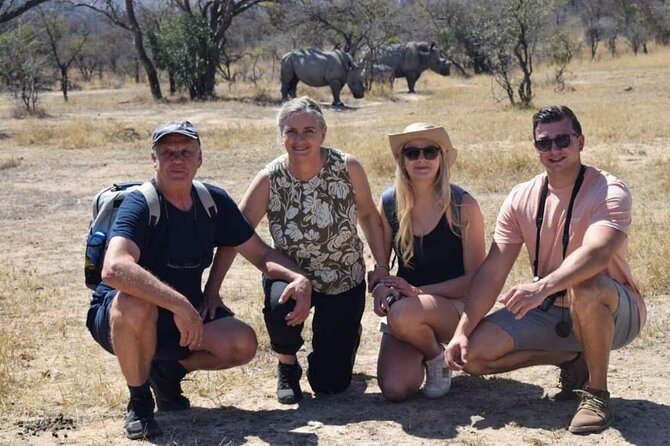
- Rhino sightings are a major draw: The day includes tracking rhinos, and one outing recorded seven rhinos along with zebra, wildebeest, baboons, small antelope, and many bird species.
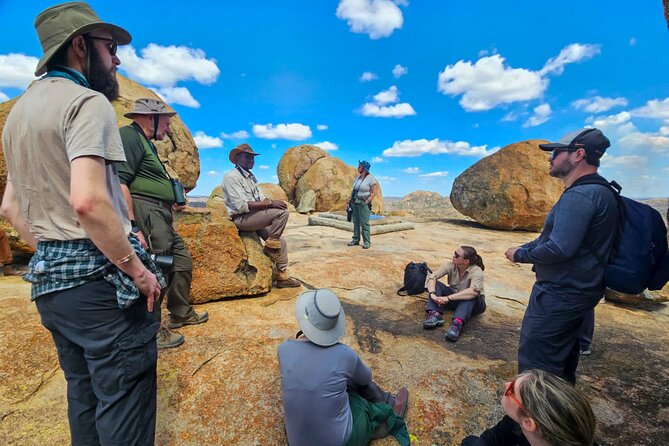
- World’s View adds powerful scenery: From Cecil Rhodes’ burial place, you look across the granite hills and hear how the site connects to colonial Zimbabwe.
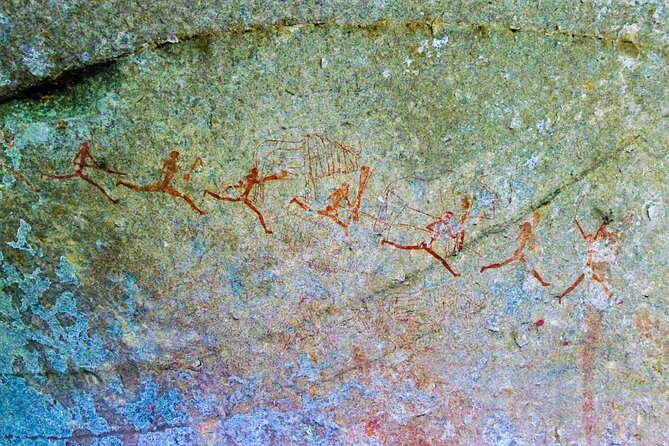
- Ancient Bushmen paintings give the park a human story: Your guide explains the rock art and its connection to the return of rhinos to Matobo.
- Ndebele and colonial history are handled together: Expect discussion of Ndebele kings, European settlement, the Matabele wars, and the Shangani Patrol.
- The eight-person limit keeps it personal: Guides such as Blessing, Bongani, and Jordan have been praised for patience, clear explanations, and a thoughtful approach.
- Lunch, transfers, and digital photos are included: At $140 per person, the package covers more than admission and guiding alone.
Why Matobo deserves a full day
Matobo National Park is not a place you understand by rushing from one viewpoint to the next. Its rounded granite hills, balancing rocks, caves, and open spaces create a setting that feels both wild and deeply tied to human memory.
The park also brings together several kinds of travel in one outing. You may spend part of the morning looking for rhinos, then stop at a sacred site to discuss Ndebele traditions, then study paintings made thousands of years ago. That range is the reason I see this as a strong choice for anyone who wants more than a standard wildlife drive.
The tour is advertised as about six hours of touring, with the full experience taking roughly eight hours. It starts at 9:00 a.m. and includes hotel transfers, so you should plan on giving the day most of your morning and afternoon. The schedule is long enough to reach several parts of Matobo without turning every stop into a quick photograph.
Other Zimbabwe days people book alongside this one:
- Helicopter Scenic Flight over Victoria Falls 12-13 minutes Flight
★ 5.0 · 1,391 reviews - Victoria Falls: Dinner Cruise on the Zambezi River
★ 4.9 · 925 reviews - Dinner Cruise on the Zambezi River
★ 5.0 · 518 reviews
Starting with Indaba and the Matobo Hills
The day begins with a journey toward Indaba and the Matobo Hills. Pickup is offered, which removes one of the more awkward parts of visiting a large park area: arranging transport between your accommodation and the start of the sightseeing.
Your first impression is likely to come from the unusual granite formations. Matobo is famous for rounded boulders and balancing rocks rather than the flat, open plains many people picture when they think of African wildlife. The rock formations give the park a strong sense of place, while the open areas provide chances to watch for animals and birds.
This opening section also lets your guide set the context for the day. You are not simply being driven to a series of unrelated stops. The rocks, caves, water sources, wildlife, and sacred places all help explain why Matobo has mattered to people for thousands of years.
Tracking rhinos among rocks and scrub
Rhino tracking is one of the most compelling parts of the experience. The tour focuses on finding these animals in their natural surroundings, rather than promising a guaranteed close encounter. That distinction matters. Wildlife sightings can never be fully controlled, but the day is built around looking carefully and giving you time to understand the animals and their habitat.
One outing produced sightings of seven rhinos, along with zebra, wildebeest, baboons, small antelope, and many bird species. You could see a similar mix, but you should treat that as a possibility rather than a promise. The park’s appeal is partly in the search itself, with your guide helping you notice movement, tracks, birds, and shapes among the rocks.
The rhino story here has an important conservation angle. You learn how Bushmen paintings and the wider cultural importance of the area connect with the successful reintroduction of rhinos into Matobo National Park. That gives the wildlife stop more meaning than a simple animal checklist.
Bring patience. A small group helps because the guide can spend more time pointing out details and answering questions, but the animals still decide the pace. Binoculars are not listed as provided, so if you own a pair, packing them would be sensible.
World’s View and Cecil Rhodes’ grave
World’s View is one of the day’s key stops. It is the burial place of Cecil John Rhodes, the British colonialist whose name remains tied to a major part of southern African history. From this high point, you get broad views across the granite hills, but the site is not just a scenic lookout.
Your guide discusses Rhodes’ place in the colonial story and sets it against the history of the people who already lived in the region. This is useful context because a beautiful view can otherwise make a complicated site feel too simple. Matobo asks you to hold both things at once: the visual power of the hills and the difficult legacy of European expansion.
The climb or walk to a viewpoint may require care. One person with a cane was able to reach a memorable view with help from guide Blessing, who was described as patient and reassuring. That does not mean every part of the tour is suitable for every mobility level, but it does suggest that you should explain your needs before setting out rather than quietly struggle on the day.
Same falls, a completely different kind of day:
- Victoria Falls: Chobe National Park Day Trip with Lunch
★ 4.7 · 518 reviews - Victoria Falls: Boma Dinner and Drum Show
★ 4.4 · 415 reviews - Victoria Falls: Helicopter Tour with Hotel Pickup
★ 4.8 · 371 reviews - Victoria Falls: 2-Hour Luxury Zambezi River Sunset Cruise
★ 4.8 · 303 reviews
Ndebele kings, warriors, and the Shangani Patrol
Matobo’s human story reaches back to the Ndebele kings and the Matebele warriors. During the tour, you learn about their interactions with the first European settlers and the conflicts that followed.
The discussion includes the Matabele wars and the Shangani Patrol, a colonial military episode in which 3,000 warriors killed the patrol. The subject is not a decorative side note. It helps explain why the hills carry such weight in local memory and why a tour focused only on wildlife would miss much of what makes Matobo important.
This part of the day is especially valuable if you want historical context delivered at the actual places connected to it. A guide can point to the terrain and explain how the hills, caves, and routes shaped human activity. You also have the chance to ask questions, something that is harder to do on a large coach outing.
The quality of this section depends heavily on the guide. Blessing has been singled out for being professional, patient, and informative. Jordan has also been praised for making the day interesting from beginning to end, while Blessing and Bongani have worked together to make the outing welcoming. Guide assignments can change, so treat these names as examples rather than a guarantee.
Ancient Bushmen paintings in the caves

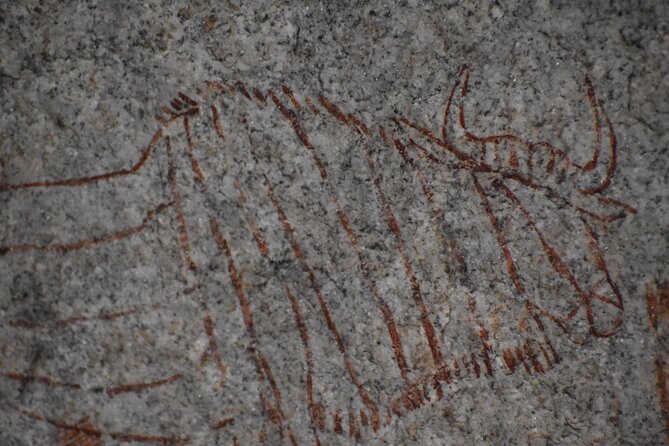
The cave paintings provide one of Matobo’s most memorable links with the distant past. You may see images created thousands of years ago and learn about the people who made them, the meaning behind the art, and the place of rock shelters in the area’s cultural life.
The paintings are not something to hurry past. Their age is impressive, but the real value comes from having a guide explain what you are seeing. Without that context, faded marks on rock can be easy to overlook. With it, the caves become evidence of long-standing human knowledge of the hills and the animals living there.
This stop also connects directly with the park’s rhino conservation story. The paintings helped draw attention to the long relationship between people, animals, and the Matobo area, while the reintroduction of rhinos gives the modern part of that story a hopeful turn.
You should wear closed-toe shoes because the route can include uneven ground and rocks. The tour calls for moderate physical fitness, so anyone uncomfortable with walking on rough surfaces should ask about the level of exertion before booking.
Balancing rocks, sacred places, and birdlife
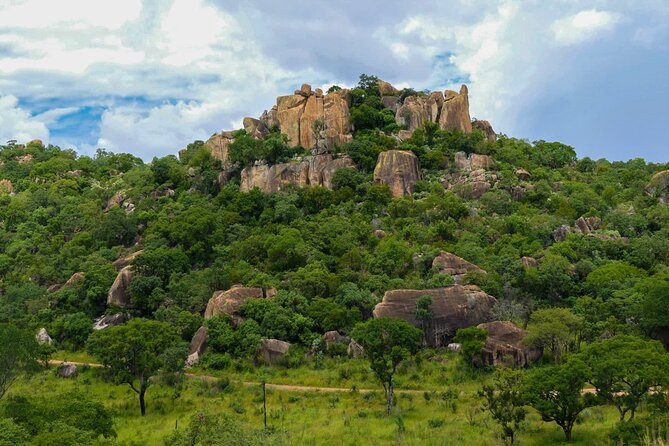
The balancing rocks are another signature sight. These formations look precarious but have been shaped by natural forces over long periods. They give you some of the best photographs of the day and help explain why Matobo feels so different from other Zimbabwe attractions.
The tour also includes sacred and historical sites beyond World’s View. The exact order can vary, but the guiding theme remains clear: Matobo is a place where geology, wildlife, and belief meet. Your guide may also pause for birds and smaller animals rather than driving past in pursuit of only the largest creatures.
That flexibility is one of the practical benefits of a group limited to eight people. A guide can respond to what is happening around you. If a bird appears or an animal is spotted, you have a better chance of stopping without the delay and noise associated with a much larger party.
Pack a sun hat, sunscreen, and insect repellent. Khaki clothing is recommended, mainly as sensible fieldwear for a warm outdoor day. Comfortable shoes matter more than dressing for photographs.
A local-style BBQ lunch in the hills
Lunch is prepared outdoors at a favorite spot in the Matobo Hills. The meal is described as a BBQ with local flavors, and it is included in the price.
This is a welcome pause after a morning of walking, wildlife watching, and history. It also keeps the experience connected to the place rather than sending you back to town for a hurried meal. You can enjoy the setting, take stock of what you have seen, and continue the conversation with your guide.
The lunch is one reason the $140 price needs to be judged as a package. You are paying for a full day of transport, guiding, park exploration, wildlife searching, history, rock art, lunch, and digital souvenir photos. If you only want a short wildlife drive, it may feel expensive. If you would otherwise arrange separate transport, guiding, food, and several visits, the price becomes easier to justify.
The supplied information does not specify dietary choices or a full menu. If you have food restrictions, raise them before the tour rather than assuming the BBQ can be changed on the spot.
Why the eight-person group matters
A maximum of eight people is a strong feature here. Matobo is best experienced with room for questions and enough quiet to watch wildlife. A small group also makes it easier for a guide to notice if someone needs a slower pace or extra help over the rocks.
The personal approach is reflected in the strongest guide feedback. Blessing helped one person using a cane reach a viewpoint, and the same guide was praised for creating a safe, patient experience near the rhinos. Bongani has also guided the outing, and Jordan has been praised for keeping the day informative and engaging.
Still, a small group does not turn the tour into a private trip. You will share the vehicle and schedule with other people, and the minimum number of bookings must be met for the activity to operate. Group discounts are available, which may improve the value if you are booking with family or friends.
Timing, fitness, and what to pack
The meeting time is 9:00 a.m., and the full day lasts about eight hours, with around six hours devoted to the main tour experience. Hotel pickup is offered, and the activity is near public transportation.
The moderate fitness rating is worth taking seriously. This is not presented as a strenuous expedition, but you may walk on uneven ground, climb around rocks, and reach viewpoints that require effort. Closed-toe shoes are essential. A sun hat, sunscreen, insect repellent, and practical khaki clothing will make the day more comfortable.
The experience has a 4.9 rating from 39 reviews, with 100 percent recommending it. Those figures suggest very strong satisfaction, particularly with the guides, wildlife, views, and lunch, but they cannot remove the usual uncertainty of wildlife viewing or the physical demands of a rocky park.
Free cancellation is available if you cancel at least 24 hours before the 9:00 a.m. start time. Changes or cancellations inside that window are not refunded, and the operator may offer another date or a full refund if the minimum number of bookings is not reached.
Who should book The Best of Matobo
I would choose this tour if you want Matobo explained rather than simply photographed. It suits you best if rhinos matter, but you also want Ndebele history, colonial context, cave art, sacred places, and geological sights in the same day.
It is also a good match for anyone who values a small group and prefers an organized outing with transport and lunch included. The combination keeps the day simple without stripping away the local setting.
I would hesitate if you want a guaranteed close animal encounter, dislike outdoor heat, or have difficulty walking over uneven rocks. I would also check the physical requirements in advance if you use a cane or need regular assistance. The experience may still be possible, but you should make your needs clear before departure.
Should you book this Matobo tour?
Book it if you want the broadest introduction to Matobo in one well-organized day. The strongest reasons are the eight-person limit, rhino tracking, the cave paintings, World’s View, and guides such as Blessing, Bongani, and Jordan who bring patience and personality to the outing.
At $140 per person, it offers solid value for a full day that includes pickup, guiding, lunch, digital photos, and several major Matobo experiences. Just pack for sun and rough ground, allow a full day, and approach the wildlife sightings as a fortunate part of the experience rather than a guarantee.
FAQ
How long does The Best of Matobo tour last?
The full experience lasts approximately eight hours. The main small-group tour is described as six hours, beginning at 9:00 a.m.
What is included in the price?
The $140 price includes hotel transfers, a BBQ lunch, souvenir digital photos, and the guided Matobo experience. Group discounts are also offered.
How many people can join the tour?
The tour has a maximum of eight participants, making it a small-group experience.
Will I see rhinos?
Rhino tracking is a central part of the tour, but wildlife sightings cannot be guaranteed. One outing saw seven rhinos, as well as zebra, wildebeest, baboons, small antelope, and many bird species.
What historical sites are included?
The experience includes World’s View and Cecil John Rhodes’ grave, along with information about Ndebele kings, European settlers, the Matabele wars, and the Shangani Patrol.
Will I see ancient rock paintings?
The tour includes visits to Bushmen cave paintings that are thousands of years old, with an explanation of their importance and connection to Matobo’s history and conservation story.
What should I wear and bring?
Wear closed-toe shoes and practical khaki clothing. You should also bring a sun hat, sunscreen, and insect repellent. A moderate level of physical fitness is recommended.
Can I cancel for a full refund?
Yes. You can cancel at least 24 hours before the experience start time for a full refund. Cancellations or changes made less than 24 hours before the start are not refunded.
Just added around Zimbabwe
- Zambezi National Park Private Wildlife Safari (4 – 10 hours)★ 4.9 · 9 reviews
- Zimbabwe: Sundowner Cruise (Standard) Zambezi River★ 4.8 · 5 reviews
- Zambezi River: Kid-Friendly Whitewater Rafting★ 5.0 · 3 reviews
- Victoria Falls: Whitewater Rafting Experience★ 4.5 · 4 reviews
- Zambezi 3hr Game Drive★ 4.6 · 5 reviews
- Victoria Falls: Zambezi National Park Game Drive★ 3.9 · 8 reviews
- Victoria Falls: Zambezi River White Water Rafting Experience★ 5.0 · 7 reviews
- Victoria Falls: Vulture Safari and Bush Walk★ 5.0 · 5 reviews