Reviewed · 1-DAY TOURS
Khami Ruins Day Trip
Khami Ruins is not just another pile of old stones. This was the 16th-century capital of the Torwa Dynasty, and its carefully built walls, raised platforms, narrow passages, and royal hill complex offer a rare look at a later chapter of Zimbabwe’s past. The site lies about 30 minutes from central Bulawayo, making it an easy half-day outing.
I like the private format, since your group can set the pace and ask questions without being folded into a large crowd. I also like the combination of hotel pickup, air-conditioned transport, snacks, and bottled water. The main catch is that admission fees and taxes are not included in the $80 price, so confirm the final cost before booking.
Key points to know
- A 16th-century royal capital: Explore the former center of the Torwa Dynasty, including the chief’s residence on the Hill Ruin.
- About 30 minutes from Bulawayo: Pickup makes this a practical half-day trip from the city.
- Private transportation: Only your group takes part, with an air-conditioned vehicle provided.
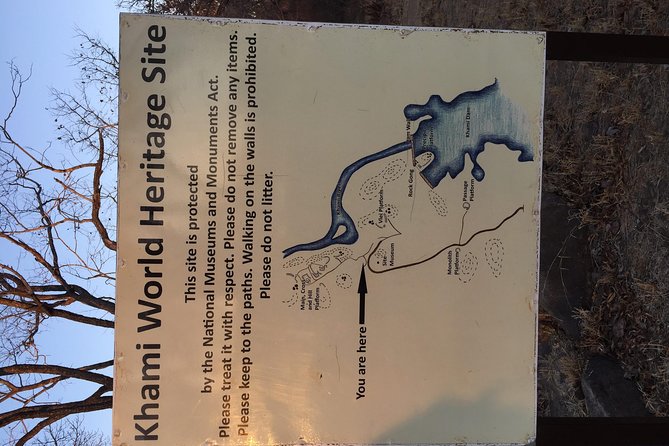
- Three hours at the ruins: The main visit covers the Hill, Vlei, Monolith, and Passage platforms.
- Excellent archaeological value: Khami was not heavily damaged by treasure hunters, leaving its layers of settlement unusually useful for study.
- Plan for extra fees: Admission, taxes, and other applicable charges are not included in the advertised price.
Why Khami Ruins deserves your time
Khami occupies an important place in Zimbabwe’s story. Great Zimbabwe is the better-known stone city, but Khami helps explain what came after it. The site marks a link between the era associated with Great Zimbabwe and the later period of Zimbabwean history.
That makes the ruins especially useful for anyone who wants more than a quick photo stop. You can see how stone construction continued and changed over time, with walls arranged around raised living areas and royal spaces. The design is not limited to one grand building. It is a broad network of platforms, passageways, galleries, and decorated walls.
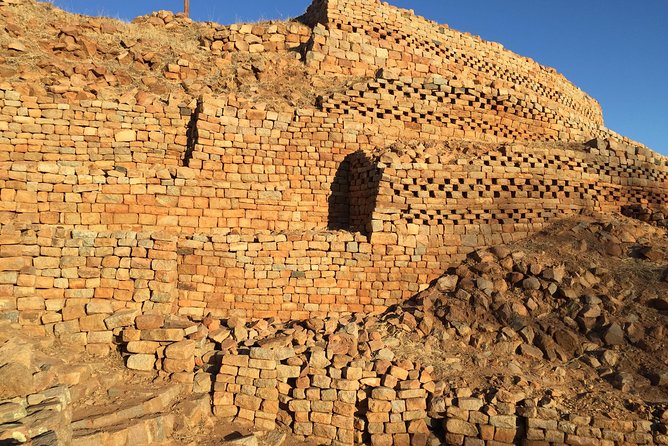
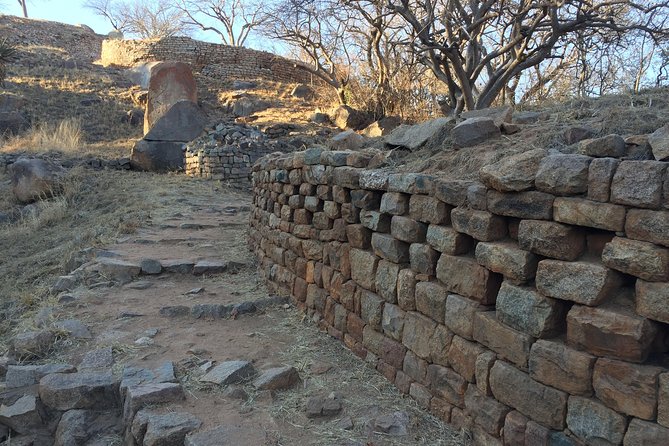
I find the site appealing because it rewards close looking. The walls are built from dry stone, with no visible mortar holding the blocks together. Chevron and chequered designs add pattern to what might otherwise seem like plain masonry. Narrow routes and perambulatory galleries give the complex a sense of order, even when you are looking at ruins rather than complete buildings.
Khami is also important because it was not destroyed by treasure hunters. Its undisturbed stratigraphy gives archaeologists a clearer record of how the settlement developed. You will not see every part of the old city intact, but the surviving structures help show how people used the hill, the platforms, and the surrounding area.
A few more Zimbabwe trips to weigh up
- Victoria Falls: Chobe National Park Day Trip with Lunch
★ 4.7 · 518 reviews - Chobe Day Trip from Victoria Falls, Zimbabwe
★ 4.6 · 250 reviews - Chobe Day Trip From Victoria Falls Zimbabwe
★ 4.5 · 196 reviews
The drive from Bulawayo to the ruins

The trip begins with pickup, and the drive from central Bulawayo takes roughly 30 minutes according to the experience details. That short distance is one of the strongest practical reasons to add Khami to a Bulawayo stay. You do not need to surrender an entire day to reach an important archaeological site.
Transport is provided in an air-conditioned vehicle. In Zimbabwe’s heat, that matters. The package also includes bottled water and snacks, useful touches for a visit where you may spend several hours outside. Since the tour is private, you travel only with your own group rather than waiting for a large mixed party at each stop.
The timing is listed as two to four hours overall, with about three hours set aside for the ruins. That range allows for pickup and transport differences, along with the pace of your visit. If you want a quick look, you may finish sooner. If you want to examine the wall patterns and ask detailed questions, expect to use most of the available time.
Lesley has provided hotel pickup and guiding on this outing. At Khami, a local on-site guide can also explain the details of the ruin. That arrangement is useful because the driver or trip guide helps with the overall visit, while the local guide can focus on the structures directly in front of you.
Reading the Hill Ruin and the Mambo’s residence
The Hill Ruin, also called the Hill Complex, is the main place to understand Khami’s political structure. The chief’s residence, known as the Mambo, was located here. This raised position separates the royal center from the lower parts of the settlement and gives the site a clear sense of hierarchy.
You should take time here rather than rushing through for a single photograph. Look at how the walls divide the platforms and how the stonework creates boundaries between spaces. The remains do not offer a modern museum-style explanation at every turn, so a guide is useful in helping you connect the stones to their former purpose.
The population lived in daga huts made from cobwork, set around a series of granite walls. The huts themselves have not survived in the same way as the stone structures, but the arrangement helps you picture a settlement with different types of space: royal areas, residential areas, and routes through the complex.
This is where the site becomes more than a collection of masonry. The stone walls were part of a working capital. They helped organize movement, status, and daily life. You may find that the smaller passages are just as interesting as the broad platforms because they show how carefully the settlement was laid out.
The Vlei, Monolith, and Passage platforms
The tour covers several named areas, including the Vlei, Monolith, and Passage platforms. Each adds another piece to the plan of Khami. The names are practical markers, but the real interest lies in how the platforms relate to one another and how the walls guide movement through the site.
The Passage platform is particularly useful for noticing the narrow passageways and galleries. These routes are not random gaps between fallen stones. They form part of the design, directing people around and between the structures. You will want to listen closely here, since the purpose of each route may not be obvious at first glance.
The Monolith platform helps show the range of stone features at Khami, while the Vlei platform adds to the overall picture of a spread-out complex rather than one isolated building. The tour does not simply stop at the most photogenic wall. It takes you through a series of structures that together explain the scale of the old capital.
The decorative work deserves a slow look. Chevron and chequered patterns appear in the walls, giving them a stronger visual character than plain stacked stone. These details also show the level of workmanship involved. Bring your attention down to the courses of stone and along the wall faces, not only toward the wider views.
Same falls, a completely different kind of day:
- Helicopter Scenic Flight over Victoria Falls 12-13 minutes Flight
★ 5.0 · 1,391 reviews - Victoria Falls: Dinner Cruise on the Zambezi River
★ 4.9 · 925 reviews - Dinner Cruise on the Zambezi River
★ 5.0 · 518 reviews - Victoria Falls: Boma Dinner and Drum Show
★ 4.4 · 415 reviews
What makes Khami different from Great Zimbabwe
Khami is described as Zimbabwe’s second largest stone-built monument. That comparison is useful, but you should not expect it to feel like a smaller copy of Great Zimbabwe. Its character comes from its own arrangement of platforms, galleries, passageways, and decorated walls.
Its historical importance also differs. Khami provides a bridge between the history associated with Great Zimbabwe and the later Zimbabwe period. If you have already seen Great Zimbabwe, Khami can extend that story. If you have not, it still works as a strong introduction to Zimbabwe’s stone-building traditions.
The site’s preservation adds another layer of value. Because Khami was not destroyed by treasure hunters, its stratigraphy remains scientifically important. In simple terms, the layers left in place can help researchers understand how the settlement changed over time. You may not see every archaeological process during a normal visit, but that preservation explains why the ruins matter beyond their appearance.
I would choose Khami for its combination of visible architecture and archaeological importance. The walls are attractive, but the real reward comes from understanding what they reveal about power, settlement, and construction in this period.
How the private format changes the visit
A private tour can make a big difference at an archaeological site. You can ask why a wall is placed where it is, pause at a decorative section, or spend less time on an area that interests you less. The group format does not force you to follow strangers with different priorities.
The tour is suitable for most participants, according to the available information. Still, you should remember that this is an outdoor archaeological site with stone structures and passageways. The practical details do not specify accessibility arrangements, so ask the provider directly if anyone in your group needs a particular level of access or assistance.
The guides are one of the most important parts of the experience. Lesley has handled hotel pickup and provided a thorough explanation of the ruins. A local guide at the site can add another voice and give more direct explanations of the structures. Since the site is not presented as a fully built museum complex, these explanations help you get more from what you see.
The private setup also suits photographers and content creators. One visitor arranged a full tour covering the buildings and structures for a YouTube project. If you plan to take extensive photos or video, tell the provider in advance and allow the full three hours rather than trying to squeeze the site into a short stop.
Is $80 good value?
The listed price is $80 per person. For a private half-day experience that includes pickup, an air-conditioned vehicle, private transportation, snacks, and bottled water, that can be fair value, especially if you are traveling with others and can use a group discount.
The price needs a careful look because all fees and taxes are not included. Admission is also separate. I would ask for the complete amount before confirming, since the advertised figure is not the final all-in cost.
Value depends on what you want from the visit. If you only need a ride to Khami and a quick look around, $80 may feel high. If you want hotel pickup, a private vehicle, guide support, and enough time to understand the Hill Complex and the other platforms, the price makes more sense.
The tour is also efficient. Khami is close to Bulawayo, and the two-to-four-hour schedule leaves room for other plans on the same day. That is useful if you are building a larger Zimbabwe itinerary and cannot spare a full day for every historical site.
What to bring and how to plan
The tour includes water and snacks, but I would still dress for an outdoor visit and bring anything you personally need for several hours away from your hotel. Comfortable clothing and suitable footwear are sensible for walking around stone structures and narrow routes.
Allow the full three hours if you want to see the complex properly. The site includes more than the chief’s residence. The Vlei, Monolith, and Passage platforms, along with the galleries and decorated walls, are part of what makes Khami worth the trip.
A camera is useful, but do not let it turn the visit into a race. Take close photographs of the chevron and chequered wall decoration, then step back to see how the walls shape the platforms. If you are recording video, the private format gives you more control over the pace.
The experience requires good weather. If poor weather cancels the tour, you are offered another date or a full refund. The provider also requires a minimum number of participants, despite the tour being private. If that minimum is not met, you are offered another date or experience, or a full refund.
Free cancellation is available up to 24 hours before the start time. Changes or cancellations made less than 24 hours in advance are not accepted for a refund, so keep the local cut-off time in mind.
Who should book this Khami excursion?
I would recommend Khami to anyone staying in Bulawayo who cares about archaeology, architecture, or Zimbabwean history. It is also a smart choice if you prefer a focused outing rather than a long road trip.
History fans will get the most from the visit, especially if they want to understand the period after Great Zimbabwe. Photographers and video creators should appreciate the range of platforms and wall patterns, along with the ability to travel privately.
Families and mixed-interest groups may also find the short drive helpful. The excursion does not demand a full day, and the guide can adjust the pace within your private group. Still, people who dislike outdoor ruins or want a fully structured indoor museum experience may find the site less rewarding.
The strongest reason to book is the guiding. Without context, dry-stone walls can blur together. With Lesley and the local guide, you have a better chance of understanding the Hill Complex, the Mambo’s residence, the former daga homes, and the careful design of the passageways.
Should you book the Khami Ruins Day Trip?
Yes, if you are based in Bulawayo and want a serious archaeological visit without spending a full day on the road. Khami offers royal platforms, unusual wall decoration, and an important link between Great Zimbabwe and later Zimbabwean history.
Book it if private transport, hotel pickup, snacks, and guide support matter to you. Before paying, confirm the separate admission charge, taxes, and total cost. If those extras fit your budget, this is a worthwhile half-day trip to one of Zimbabwe’s most important stone-built sites.
FAQ
Where is Khami Ruins located?
Khami Ruins is in Zimbabwe, about 30 minutes by car from central Bulawayo.
How long does the Khami Ruins trip take?
The experience lasts approximately two to four hours, with about three hours spent touring the ruins.
What is Khami Ruins known for?
Khami is known as the 16th-century capital of the Torwa Dynasty and Zimbabwe’s second largest stone-built monument.
Is Khami Ruins a UNESCO World Heritage Site?
Yes. Khami Ruins is identified as a UNESCO World Heritage Site.
Is hotel pickup available?
Yes. Pickup is offered, and hotel pickup has been provided for this experience.
Is the tour private?
Yes. Only your group participates in the private tour or activity.
What transportation is provided?
An air-conditioned vehicle and private transportation are included.
Are snacks and water included?
Yes. Snacks and bottled water are included.
Is admission included in the tour price?
No. Admission is not included. All fees and taxes are also listed as excluded.
Can I cancel for a full refund?
Yes, if you cancel at least 24 hours before the experience start time. Cancellations made less than 24 hours in advance are not refunded.
Just added around Zimbabwe
- Zambezi National Park Private Wildlife Safari (4 – 10 hours)★ 4.9 · 9 reviews
- Zimbabwe: Sundowner Cruise (Standard) Zambezi River★ 4.8 · 5 reviews
- Victoria Falls: Whitewater Rafting Experience★ 4.5 · 4 reviews
- Zambezi 3hr Game Drive★ 4.6 · 5 reviews
- Zambezi River: Kid-Friendly Whitewater Rafting★ 5.0 · 3 reviews
- Victoria Falls: Zambezi National Park Game Drive★ 3.9 · 8 reviews
- Victoria Falls: Zambezi River White Water Rafting Experience★ 5.0 · 7 reviews
- Victoria Falls: Vulture Safari and Bush Walk★ 5.0 · 5 reviews
1-Day Tours, compared.