Reviewed · TOURS
Harare City Tour & Zimbabwe Highlights
Harare’s story comes into focus when you move from Africa Unity Square and the government quarter to Mbare’s bus terminus and produce market, then out to the rock formations at Epworth and Domboshawa Hill. This is not just a drive past monuments. It connects Zimbabwe’s politics, faiths, daily life, geology, and ancient art in one long day.
I like the personal cultural orientation at the start, and I like the contrast between formal central Harare and working Mbare. The guide’s role is important here, and one well-received tour included a useful pre-tour briefing and a friendly stop for road food. The main concern is value: at $128 per person, lunch and entrance fees are extra, and access restrictions can sometimes change the promised route.
Key points to know before booking
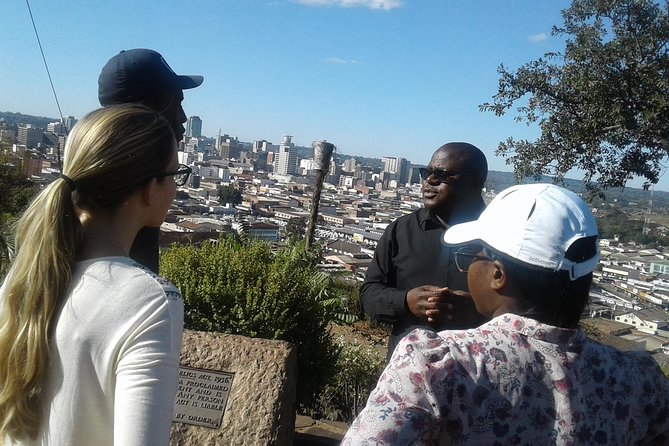
- Africa Unity Square sets the context: You receive an introduction to Zimbabwe’s pre-colonial, colonial, and post-colonial periods, along with an explanation of the country’s three arms of government.
- Mbare shows everyday Harare: The oldest township in the capital connects the city to the rest of Zimbabwe through its major bus terminus and fresh-produce market.
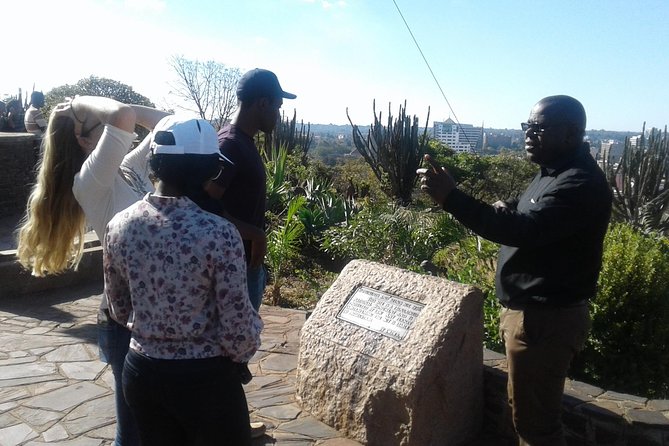
- Epworth adds dramatic geology: The Chiremba Balancing Rocks include the Money Rock and Flying Boat formations, with city views from a lookout.
- Domboshawa combines nature and culture: You visit a cave with paintings, see another balancing rock, and walk up and down the hill.
- The day involves several hours on the move: Plan for about two hours in central Harare, one hour at the balancing rocks, and two hours at Domboshawa, plus driving and lunch.
- The booking has a small group limit: No more than 15 people are accepted, and hotel pickup is offered.
Starting in central Harare at Africa Unity Square
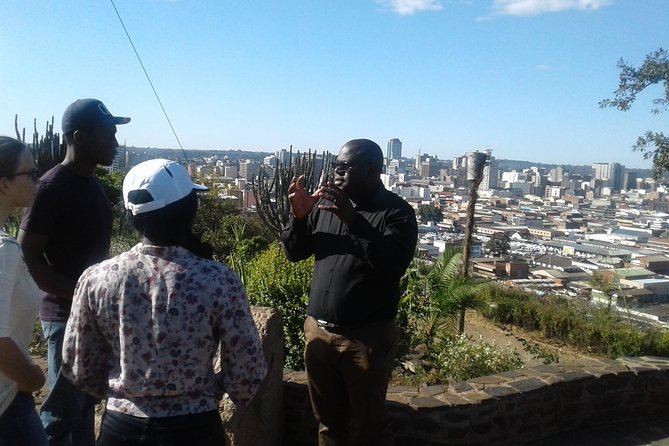
The tour begins with a hotel-lobby meeting in Harare. That sounds simple, but it matters in a city tour. You do not have to find a distant departure point, and the guide can begin with an orientation suited to your interests and background.
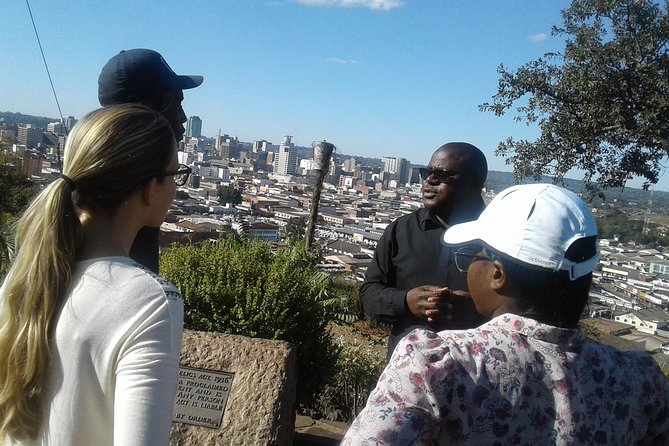
The first stop is Africa Unity Square, formerly Cecil Square. This is the right place to begin because the surrounding buildings help explain how Zimbabwe is governed. From here, your guide points out the institutions connected with the judiciary, legislature, and executive branches.
You also see the area around the oldest hotel in the city. The point is not simply to collect a photograph. The square gives you a physical sense of how the capital was organized and how its public spaces carry layers of national memory.
The historical introduction is divided into three broad periods: pre-colonial Zimbabwe, colonial rule, and the post-colonial era. That structure should help you place later sights in context. You will hear about Zimbabwe and the wider continent before colonial rule, the changes brought by colonial government, and the country’s more recent political development.
I appreciate this approach because a city tour can otherwise become a list of buildings with little meaning. Here, the buildings are used as a map for understanding the country. If you enjoy asking questions, this is likely your best chance to shape the day around subjects that interest you.
A few more Zimbabwe trips to weigh up
- HARARE CITY TOUR ADVENTURES !!
★ 4.9 · 6 reviews
Faith and public life around the capital
Harare has a wide mix of religious traditions, and the opening orientation includes an introduction to the country’s religious diversity. You are shown places of worship in and around the city, with an explanation of the different faiths found in Zimbabwe.
The information provided does not promise entry into every religious building, so you should think of this part as an exterior and cultural introduction. That is still useful. Places of worship help show how communities use the city, and they add a human element to the government buildings and formal avenues.
The central Harare portion lasts about two hours. Admission is listed as free, though the exact time spent at each point can shift. Ask your guide early if you want more time for photography, architecture, or questions about Zimbabwean society.
Driving past the state institutions and Kopje
From the central business district, the vehicle passes several important public buildings, including parliament, judiciary offices, executive buildings, and central bank buildings. The tour also drives through Kopje, a notable high point in the city.
This part is best understood as a moving orientation rather than a series of long visits. You will see the buildings from the vehicle and receive commentary as you go. That makes the air-conditioned vehicle particularly useful, especially during a full day that later includes walking at two outdoor sites.
I like the rhythm of this section. It gives you the formal face of Harare before the tour shifts toward places where daily trade and transport take center stage. You can also use the drive to ask how the capital functions today, rather than saving all your questions for the final stop.
Mbare: the city’s working heart
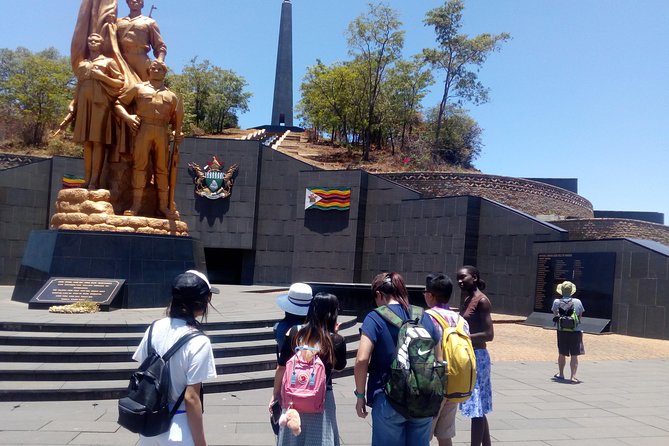
Mbare is one of the most revealing stops on the route. It is the oldest township in Harare and one of the oldest in Zimbabwe. The area is described as a hive of city life, and its importance comes from its connection to the rest of the country.
Mbare is home to Zimbabwe’s largest bus terminus and its biggest local fresh-produce market. That makes it a practical crossroads, not just a historic neighborhood. Produce, buses, and people moving in and out of the capital all help you see how Harare connects with other parts of Zimbabwe.
This is where the tour’s promise of seeing the city from a personal side becomes most convincing. Government buildings explain how the state works. Mbare shows how people shop, travel, and make their way through the capital.
You should keep your expectations sensible. The stop is intended to provide insight into local life, not a polished shopping experience or a formal museum visit. Conditions may feel more crowded and less orderly than in the central district. Stay close to your guide, listen carefully to local instructions, and keep valuables secure as you would in any busy transport and market area.
The contrast is the point. Mbare may be the most memorable part of the city portion because it puts Harare’s public institutions beside its everyday economic life.
Same falls, a completely different kind of day:
- Helicopter Scenic Flight over Victoria Falls 12-13 minutes Flight
★ 5.0 · 1,391 reviews - Victoria Falls: Dinner Cruise on the Zambezi River
★ 4.9 · 925 reviews - Dinner Cruise on the Zambezi River
★ 5.0 · 518 reviews - Victoria Falls: Chobe National Park Day Trip with Lunch
★ 4.7 · 518 reviews
Epworth’s Chiremba Balancing Rocks
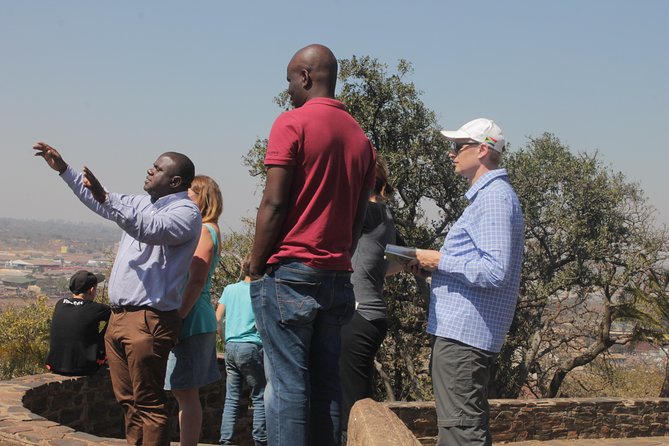
After the central city and Mbare, the route continues to Chiremba, also known as Epworth, to see the balancing rocks. Admission is not included in the tour price and is paid directly to the supplier, so budget for that extra before you leave.
The formations include the Money Rock and Flying Boat, names that give the shapes an immediate sense of character. These are large natural rock structures balanced in striking ways, and the site offers a different view of Zimbabwe from the urban history discussed in the morning.
You also reach a viewpoint with views toward parts of Harare. The one-hour stop is long enough to see the main formations and take photographs, but it is not an extended hiking session. The tour description does not give a detailed trail grade, so ask the guide about the walking conditions on the day if you have concerns.
This stop works well because it breaks up the city sightseeing. You move from civic buildings and markets to open ground and unusual geology. The change of setting also gives you a chance to think about how Zimbabwe’s natural features have become part of its national identity.
The cost issue is worth repeating. At $128, the tour already sits in the expensive range for a one-day city-and-outskirts outing. The extra admission charge is not necessarily a problem, but you should know about it before booking so the final cost does not surprise you.
Domboshawa Hill and the painted cave
After lunch, the vehicle heads northeast to Domboshawa Hill. Lunch is not included, so you pay for your own meal. The supplied information does not name a specific restaurant or set menu, which gives the guide some flexibility but means you should ask about the lunch plan at the start of the day.
Domboshawa brings together several parts of Zimbabwe’s past and natural setting. You visit a cave with paintings associated with the San, often called Bushman paintings, and you see another balancing rock. The interpretive center provides an introduction to the area before you walk up and down the hill.
This is probably the most active portion of the day. The tour allows about two hours, including the interpretation and the walk. You should wear shoes suitable for uneven outdoor ground and bring water, although bottled water is included. Sun protection is sensible as well, since the stop takes place outside.
The hill is valuable because it gives you time with the guide in a less rushed setting. You can ask questions as you go, rather than listening to a fixed explanation and moving immediately to the next stop. If ancient art, local culture, and outdoor places interest you, Domboshawa may be the strongest part of the route.
Entrance fees are listed as extra here too. The exact amount is not provided, so confirm the current charge before setting out. Access to cultural and natural sites can sometimes change, and the operator has warned that security interventions or local restrictions may force changes at short notice.
What the guide adds to the day
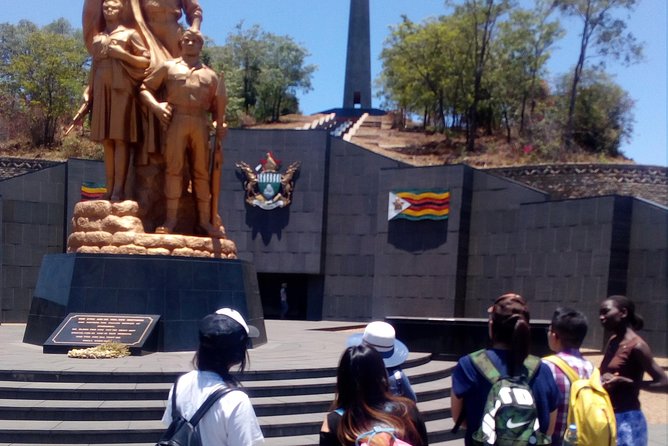
This tour depends heavily on the guide. The route covers politics, religion, local life, geology, and ancient paintings. A driver who only points out buildings would leave much of the value on the table.
The strongest feedback describes a pre-tour briefing, clear cultural and historical explanations, and a guide who was personable and friendly. One especially personal detail was a first experience eating road food during the day. That suggests the guide may add local texture beyond the basic schedule, though you should not assume a specific meal or food stop is guaranteed.
At the same time, no guide’s name is supplied for this experience. If you want a particular guide or have special interests, contact Wenhau Africa Safaris & Tours before booking and ask what can be arranged.
There was also a serious service problem in one booking. The guide did not arrive at the agreed time because the company said a technical issue prevented booking emails from coming through. The operator apologized and said it was working to fix the problem. I would confirm your pickup time and hotel details shortly before the tour, even though confirmation is supposed to arrive when you book.
Transport, timing, and group size
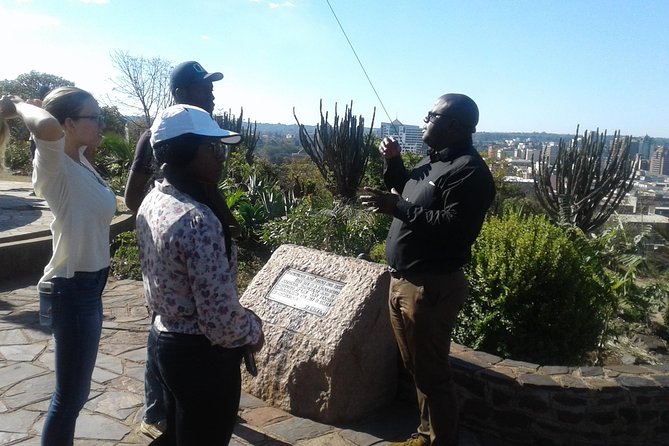
The experience lasts approximately one day. The listed stops account for about five hours, but driving between Harare, Epworth, and Domboshawa, plus lunch, makes this a full-day commitment.
An air-conditioned vehicle is included, along with bottled water and parking fees. Those inclusions are useful in a warm climate and remove two small costs that can otherwise accumulate. Hotel pickup is offered, and the meeting point is in Harare, with the tour beginning in your hotel lobby.
The maximum group size is 15 people. That is not a private tour, but it is small enough for questions and conversation if the group is not full. Most people can participate, though the Domboshawa section includes walking up and down a hill. If you have mobility concerns, ask the supplier about the conditions before paying.
The itinerary may change. Security restrictions have caused some areas to become inaccessible, and the operator says it may alter the plan when required. You should receive an update when changes are known, though one response indicates that a short-notice change may only be explained at the start.
Is $128 a fair price?
The price is $128 per person. Whether that is good value depends on how you prefer to travel in Harare.
You are paying for a guide, vehicle, hotel pickup, parking, city orientation, Mbare, Epworth, and Domboshawa in one day. If you want a structured introduction to Harare and do not want to arrange transport to the outskirts yourself, the package may be worthwhile. The range of subjects is also unusually broad for a city tour.
The price feels less attractive if you mainly want a quick city drive. Lunch is extra, entrance fees are extra, and the day includes several hours in the vehicle. You are also paying for interpretation, not simply transport and photographs.
I would compare the cost against your priorities. For a first visit, the combination of civic history, local life, natural formations, and rock art offers useful coverage. For repeat visitors who already know central Harare, the value depends more on how much you want a guide for Mbare, Epworth, and Domboshawa.
Who should book this Harare day tour?
I would recommend it to you if you want a broad first look at Harare and prefer having a local guide explain what you are seeing. It suits people interested in Zimbabwean history, government, religion, daily life, geology, and ancient art.
It also works for visitors with only one free day in the capital. You see several very different sides of the area without arranging separate taxis, guides, and site visits.
I would think twice if your budget is tight or if you dislike long days with multiple extra charges. The tour is not the best fit for someone seeking a slow, specialist visit to one museum or one archaeological site. The schedule covers a lot, but that breadth means some stops are relatively brief.
The weather policy is practical. If poor weather cancels the tour, you can receive a different date or a full refund. You can also cancel for a full refund up to 24 hours before the start time. Last-minute cancellations or changes are not accepted for a refund.
Should you book it?
Book this tour if you want context as much as sightseeing. The best feature is the way the day links Africa Unity Square, Mbare, Epworth, and Domboshawa into one story about Zimbabwe’s institutions, people, places, and past.
Before paying, confirm the hotel pickup, ask about the current entrance fees, and clarify the lunch plan. I would also ask what happens if security restrictions alter the route. With those points settled, this can be a useful and unusually varied introduction to Harare.
FAQ
Where does the Harare City Tour begin?
The tour begins with a hotel-lobby meeting in Harare, Zimbabwe. Hotel pickup is offered.
How long does the tour last?
The experience lasts approximately one day. The listed visit times are about two hours in central Harare, one hour at Epworth Balancing Rocks, and two hours at Domboshawa Hill, not including driving and lunch.
What places are visited?
The route includes Africa Unity Square, central Harare landmarks, Kopje, Mbare, Chiremba or Epworth Balancing Rocks, and Domboshawa Hill.
Is lunch included?
No. Lunch is not included in the price and must be paid for separately.
Are entrance fees included?
No. Park or site entrance fees are paid directly to the supplier.
What is included in the tour price?
Bottled water, an air-conditioned vehicle, and parking fees are included. Hotel pickup is offered.
How many people can join the tour?
The maximum group size is 15 people.
Can I cancel for a refund?
Yes. You can cancel up to 24 hours before the experience starts for a full refund. Cancellations or changes made less than 24 hours before the start time are not accepted for a refund.
Just added around Zimbabwe
- Zambezi National Park Private Wildlife Safari (4 – 10 hours)★ 4.9 · 9 reviews
- Zimbabwe: Sundowner Cruise (Standard) Zambezi River★ 4.8 · 5 reviews
- Victoria Falls: Whitewater Rafting Experience★ 4.5 · 4 reviews
- Zambezi 3hr Game Drive★ 4.6 · 5 reviews
- Zambezi River: Kid-Friendly Whitewater Rafting★ 5.0 · 3 reviews
- Victoria Falls: Zambezi National Park Game Drive★ 3.9 · 8 reviews
- Victoria Falls: Zambezi River White Water Rafting Experience★ 5.0 · 7 reviews
- Victoria Falls: Vulture Safari and Bush Walk★ 5.0 · 5 reviews
Tours, compared.

Victoria Falls Scenic Day Tour with Lunch & Helicopter Tour
Read our review →